
HeatShield Chimney Sweep in Westminster: A Homeowner’s Guide
HeatShield is not a chimney sweep service. It’s a ceramic resurfacing system applied to the inside of a clay tile flue after the sweeping is done. If your Westminster home has a deteriorating clay liner, HeatShield can restore it for a fraction of what a full stainless relining costs. But it only works under specific conditions, and we’ll walk you through exactly what those are. If you’d rather skip the research, call (877) 358-3706 and we’ll assess your flue directly.
What HeatShield Actually Does (and What It Doesn’t)
HeatShield is a cerfractory sealant, a ceramic-and-refractory compound that bonds to the inside of porous clay tile liners. When applied correctly, it seals hairline cracks, restores the smooth surface that helps draft efficiency, and prevents flue gases and moisture from migrating through the liner walls into the surrounding masonry. Think of it as resurfacing, not patching.
What it cannot do is replace structural support. If the clay tiles in your Westminster chimney have shifted, separated at the joints, or collapsed, HeatShield will not hold them together, and no amount of sealant fixes a liner that has lost its mechanical integrity. We’ve pulled failed HeatShield applications out of chimneys in Westminster where the real problem was a displaced tile that should have triggered a full relining from the start.
This is where the comparison matters. HeatShield solves surface degradation. A Chimney Repair in Westminster project that requires structural correction needs a different approach, typically a DuraFlex stainless liner installed as a standalone flue system.
The Pre-Application Inspection: What Qualifies a Liner for HeatShield
Here’s the part most contractors gloss over. HeatShield has specific candidacy criteria, and a legitimate applicator documents them before quoting you a price.
Your flue liner qualifies for HeatShield if:
- Cracks are hairline, generally under 1/4 inch in width
- No tile has shifted more than 1/8 inch out of alignment
- No tile has broken free and fallen into the flue pathway
- The total percentage of damaged surface area is under the manufacturer’s threshold for restoration vs. replacement
- There is no evidence of moisture saturation in the surrounding masonry (efflorescence, spalling brick)
If you’re in Westminster and someone quotes you HeatShield without running a camera inspection first, walk away. The camera is not optional. A visual check from the roof or the fireplace opening tells you nothing about the middle 15 feet of a 20-foot flue.
Ask for the video. Ask the technician to point out the specific defects frame by frame, and ask them to explain why each defect falls within the HeatShield eligibility window. If they can’t do that on the spot, they’re not doing an inspection, they’re doing a sales call.
Why Westminster Homes from 1955 – 1985 Are Prime HeatShield Candidates
Westminster’s building boom between the mid-1950s and mid-1980s produced thousands of homes with original clay tile flue liners. Those liners are now 40 to 70 years old. Clay tile has a service life of roughly 50 years under normal use, and Westminster’s freeze-thaw cycles plus the marine air pushing in from the coast accelerate spalling on the outer surface and hairline cracking on the inner surface.
We see a clear pattern across Westminster neighborhoods built in that window. The liner isn’t structurally failed, so a full relining would be overkill and overpriced for the actual condition. But it’s no longer smooth and airtight either. That middle zone is exactly where HeatShield earns its cost difference.
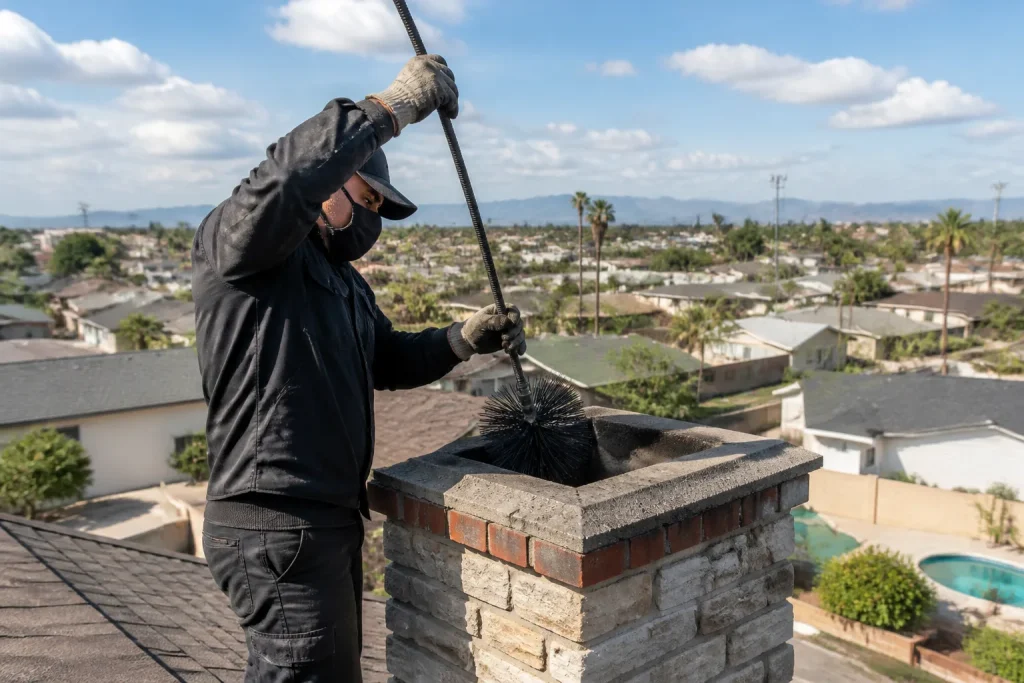
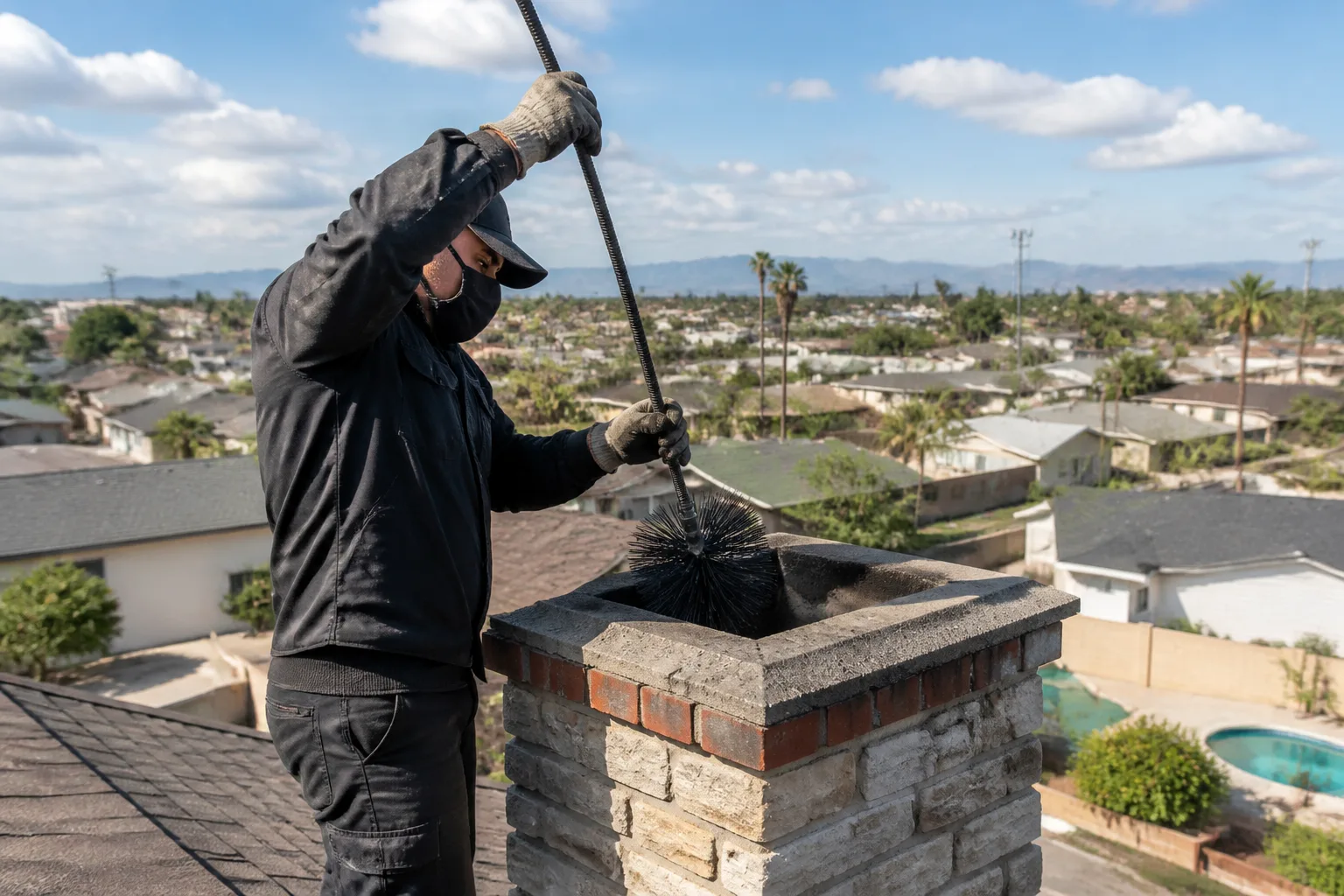
It’s worth noting what we mean by “normal use” in this context. A fireplace used 15 to 20 times per season on seasoned wood sees predictable wear. A fireplace that’s been used heavily, or one that’s burned green wood, construction scraps, or unseasoned softwood, can have creosote glazing that masks underlying damage. A thorough sweep is the only way to see what’s actually there, which is why any HeatShield conversation starts with a proper Chimney Sweep in Westminster, never a sealant quote.
HeatShield vs. Full Stainless Relining: The Real Cost Comparison
Let’s put numbers to it. In the Westminster and Orange County market, a HeatShield application on a standard single-flue chimney typically runs between $2,500 and $3,800, depending on flue height and the number of coats required. A full DuraFlex stainless liner installation on the same chimney typically runs between $4,500 and $7,000, possibly higher if the existing clay liner must be broken out first.
Here’s the table we walk homeowners through:
- HeatShield (resurfacing): $2,500 – $3,800 range; appropriate for hairline cracks and surface spalling with structurally sound tiles; restores draft and seals gases; no structural reinforcement; may last 15 – 25 years depending on usage
- DuraFlex stainless relining (full replacement): $4,500 – $7,000 range; appropriate for displaced tiles, gaps over 1/4 inch, collapsed sections, or moisture-damaged masonry; creates a new independent flue system; may last 25 years to the life of the home; required when the original liner has lost mechanical integrity
The price gap is justified when HeatShield is applied to a qualifying liner. Paying $3,000 instead of $6,000 for a restoration that lasts two decades is a sound decision. But paying $3,000 for HeatShield on a liner that should have been relined is throwing the money away, because the fix won’t hold and you’ll end up paying for the relining anyway.
We install both, and we’ll tell you plainly which one your chimney needs. When it’s a coin flip, we show you the camera footage and let you decide with full information. The materials we work with, including HeatShield, DuraFlex, and Copperfield components, are the same brands the chimney industry has standardized on for decades.
How to Verify a Certified HeatShield Applicator in Westminster
HeatShield is a proprietary system. The manufacturer certifies applicators through training and ongoing product access. A contractor cannot walk into a supply house and buy HeatShield off the shelf without that certification, which means anyone selling you “HeatShield” either has the certification or is using a different product and calling it by the name.
Here’s what to ask before signing anything:
- Ask to see the HeatShield certification, and note whose name is on it. The certificate belongs to a person, not a company.
- Ask which HeatShield product they’re specifying. The Cerfractory Flue Sealant is the standard for clay tile restoration. If they can’t name the product, they’re not an applicator.
- Ask about the cure time and the number of coats. HeatShield typically requires two to three passes with drying time between. A one-and-done application is not how the system works.
- Ask for a written warranty from the manufacturer, and verify that the manufacturer, not just the installer, backs the work.
We also work with Gelco and Olympia Chimney components on repair projects where the scope extends beyond the liner itself, such as crown repair or chase cover replacement. Knowing which material belongs in which part of the chimney is the difference between a fix that holds and a patch that fails.
When to Call a Pro Instead of Researching Further
If you’ve noticed any of these signs in your Westminster home, stop researching and get a camera inspection scheduled:
- Flakes of clay tile at the bottom of your fireplace
- White staining (efflorescence) on the exterior chimney brick
- A persistent smoky smell in the house even when the fireplace is cold
- Reduced draft compared to previous seasons
- Water in the firebox after rain
These are all signs that your liner has reached the point where professional assessment matters. None of them are things you should attempt to diagnose from the roof yourself. Chimney work on Westminster’s two-story ranches and split-levels means ladder work at height, and liner inspection requires equipment most homeowners don’t keep in the garage.
Related service: If your flue liner is fine but your dryer vent hasn’t been cleaned in years, that’s a separate fire risk worth addressing. We offer Dryer Vent Cleaning in Westminster alongside chimney work, which is convenient when you’re already booking a visit.
The Bottom Line
HeatShield works, but only when the liner qualifies. The qualified liner has hairline cracks under 1/4 inch, no displaced tiles, and no structural failure. Anything beyond that needs a DuraFlex stainless relining, and paying for anything less is a wasted investment. If you’re in Westminster and need an assessment, Chimney Repair Westminster home offers camera inspections as part of every sweep, so you’ll see exactly what your flue looks like before anyone quotes you a number. Call (877) 358-3706 to schedule, and we’ll walk you through what we find in plain language with footage you can see for yourself.
Frequently Asked Questions
No. HeatShield is a ceramic flue resurfacing system applied after a chimney has been swept and inspected. A sweep removes creosote and debris. HeatShield restores the liner surface itself. The two are separate steps, and HeatShield should never be applied over an unswept flue.
If your chimney needs its annual cleaning, call (877) 358-3706 and we’ll handle the sweep first, then talk about liner condition if the inspection warrants it.
On a properly qualified liner with a correct application, HeatShield typically lasts 15 to 25 years. The variables are usage frequency, wood type, and whether the underlying masonry stays dry. Liners exposed to ongoing moisture intrusion will degrade faster, which is why the inspection looks at the whole chimney, not just the flue.
No. HeatShield is designed for the interior flue surface, not exterior masonry. A cracked crown requires crown repair, typically using a flexible sealant or a rebuilt crown with proper overhang and a drip edge. We use Olympia Chimney and Copperfield components for crown and cap work because they’ve held up well in Westminster’s coastal climate.
If you’re not sure whether your problem is the crown or the liner, a camera inspection answers that in one visit. Call (877) 358-3706 to schedule.
Hairline cracks in a clay liner allow heat and flue gases to reach the surrounding masonry and any wood framing near the chimney. Over seasons of use, that heat transfer can ignite creosote deposits in the flue or combustible materials outside it. The liner is the only barrier between an 1,100°F fire and your home’s structure. When it’s compromised, every fire becomes a calculated risk.
That’s not a scare tactic, it’s the physics of a clay flue. If your last inspection flagged liner concerns, address them before burning season. Call (877) 358-3706 for an estimate.
Written by the team at Chimney Repair Westminster, serving Westminster since 2012.
Need Chimney Cleaning Help?
Call Chimney Repair Westminster - licensed & insured, here with fast help in Westminster.
(877) 358-3706